Choosing a booklet maker for exercise books and school work
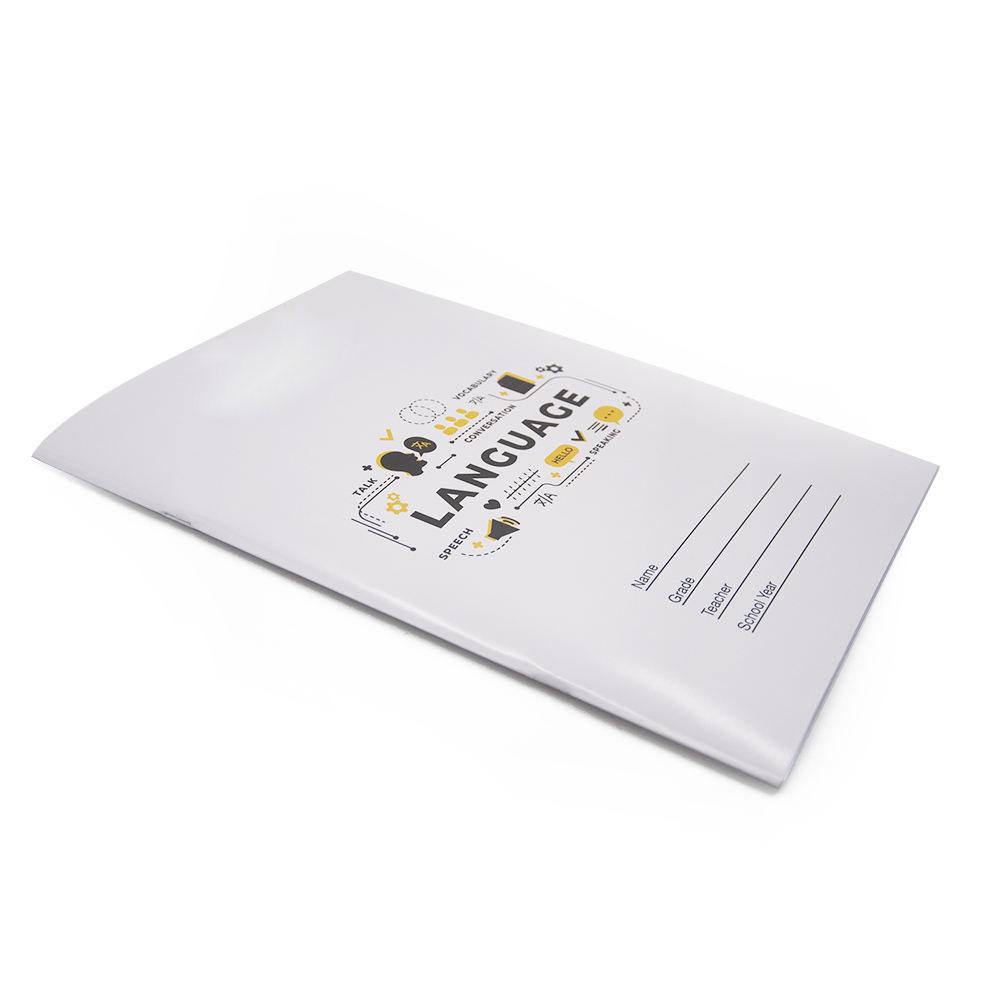
School material — exercise books, workbooks, study booklets, training manuals — is a distinct finishing job. Runs are larger than promotional work, unit cost matters more than flexibility, and the formats are wide.
Why width decides the machine
Exercise books are commonly produced on wide or A3-landscape formats, which means the flat sheet you feed is large and the folded result is long. On a long spine, two stitching heads let the middle of the booklet lift open — the pages do not sit flat because nothing holds the centre. Four heads hold the whole spine, and on wide formats that is a quality difference a teacher notices immediately, not a specification nicety.
See also Working out the payback period on a booklet maker
So on this work, choose the widest platform you can justify, and prefer the version with more stitching heads over the version with more speed.
Cost per unit, not cost per hour
School work is won on price, so the measure is cost per finished book. That is labour minutes plus waste. Two things reduce it: fewer handling steps, and fewer rejects. In-line trimming helps on both counts — it removes the guillotine trip and it removes the slight book-to-book variation that comes from hand-squaring a stack.
Volume and the case for a line
Once a single machine is producing school material every day, the constraint moves to how fast the operator can feed it. That is when a collator — and on the widest work a dedicated line — starts to make sense, because the operator is no longer turning sheets into books but supervising a process.
What to specify
Wide platform, four stitching heads, in-line front trim, and a spine capacity comfortably above the thickest exercise book you produce. Add side trimming only if your finished widths vary between jobs.