What "one pass" actually means in booklet finishing
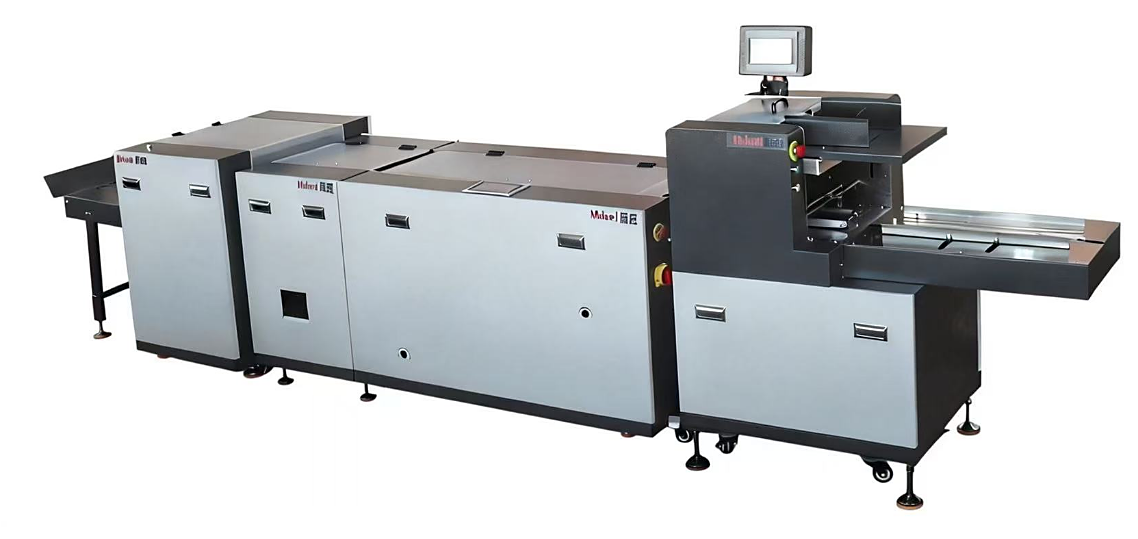
One pass means printed sheets go in at one end and finished booklets come out at the other, without anybody carrying a half-finished stack to another machine. It is easy to read that as a single moving part. It is really a claim about handling.
The steps that are genuinely inside the machine
Stitching and folding happen together, because stitching a folded section on the fold line is one operation once the sheet is positioned. In-line front trimming adds the face cut. Cover feeding adds an automatic cover. On a full configuration, all four run in the same pass, and a single operator supervises rather than works.
See also Front trim and side trim: what each one does to a booklet
The two handling steps that cost the most
The first is the trip to the guillotine. Every folded booklet has to be carried, squared, clamped and cut — and on short runs the setup of the cutter can exceed the cutting. Bringing the face trim in line removes the trip entirely.
The second is the re-registration. Every time a stack is set down and picked up, the pile has to be aligned again before the next operation. Those alignments are not on any spec sheet, but they are where the operator minutes go. Removing a handling step removes both the transport and the realignment.
What still happens outside the machine
Be honest about this part. Printing is upstream. If the job needs a cover printed on different stock, that is a separate press run. And side trimming on the widest formats may still be a separate pass depending on configuration — which is exactly why the platform steps exist, so you can bring that step in line when the volume justifies it.
How to tell whether it is worth it
Count the handling steps in your current process for one typical job, and multiply by the number of jobs. If the count is five or more, an in-line configuration removes several of them; if it is already two, a bigger machine will not help.