Why is my saddle stitch loose? Causes and fixes
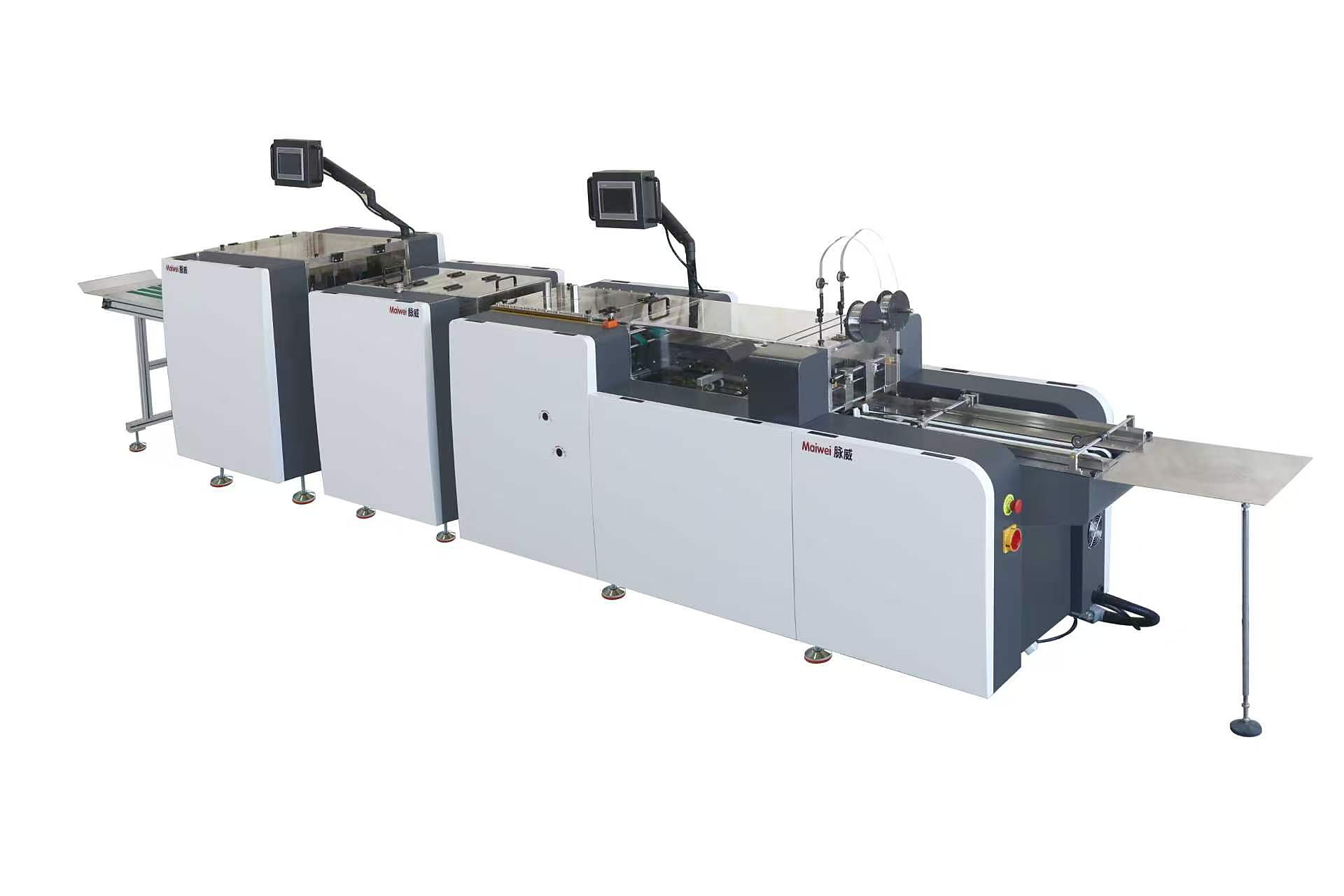
Loose stitching has five common causes, and only one of them is actually the stitching head. Working through them in order saves a great deal of unnecessary adjustment.
1. The fold is not tight enough
The wire holds a folded bundle. If the fold is soft or the crease is not sharp, the sections can move inside the fold and the wire appears loose even though it is correctly clinched. Check the fold first: a booklet whose sections can slide against each other will never stitch tight. Firmer folding and, on heavy stock, scoring before folding usually resolves it.
See also Saddle stitch vs perfect binding: which should you run?
2. The spine is too thick for the platform
Past the capacity of the machine, the fold opens up at the spine and the wire has to bridge a gap it was not sized for. The symptom is a stitch that is tight on a thin booklet and loose on a thick one, from the same machine with the same setting. That is a capacity limit, not a fault.
3. Two heads on a long spine
On wide formats, two stitching heads leave the middle of the spine unsupported. The booklet lifts open in the centre and reads as loose even when both wires are properly clinched. Four heads fix it by holding the whole spine rather than two points on it.
4. Registration drift between the fold and the stitch
If the stitch lands even slightly off the fold line, the wire crosses paper rather than the crease, and it will never sit flush. This shows up as stitches that are tight on one copy and loose on the next. It points at the positioning or the sheet alignment rather than the wire.
5. Wire gauge and clinching
Only after the first four are eliminated does the wire itself come into it. Heavier books need heavier wire, and a worn or misadjusted clincher will leave the loop open. If the same wire and setting produces tight stitches on thin work and loose on thick, the problem is upstream of the head.
If you can tell us the flat sheet size, the page count and whether the looseness is even across the spine or concentrated in the middle, we can usually narrow it down to one of these without seeing the machine.